

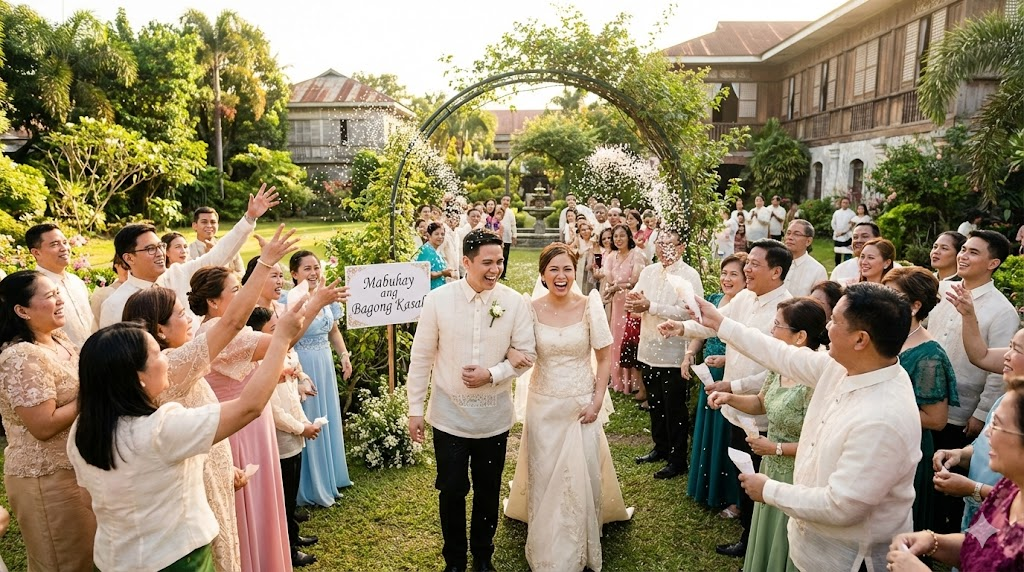
A Filipino wedding is rarely a quiet affair. It is a convergence of history, religion, and an unshakeable sense of community known as bayanihan.
For couples in the diaspora or those planning a union that bridges different cultures, understanding these traditions is about more than just following a script. It is about recognizing the deep emotional architecture that holds a Filipino family together.
The Philippines has a complex history, and its wedding customs reflect a blend of pre-colonial indigenous practices and centuries of Spanish Catholic influence.
While many modern couples choose to get legally married online to handle the paperwork efficiently before hosting a larger celebration, the cultural ceremony remains a massive priority. It is where the community validates the bond that the law has recognized.
You will find that a Filipino wedding tradition is highly visual. Every ritual, from the draping of a veil to the exchange of coins, serves as a physical manifestation of a promise.
These are not abstract concepts but tangible actions performed in front of the people who matter most.
12 Filipino Wedding Traditions That Shape the Celebration
The ceremony serves as the anchor of the celebration. While reception parties are known for their festivities, the actual union is treated with immense reverence.
The following traditions highlight the values of partnership, extended family, and spiritual guidance.
1. Pamamanhikan
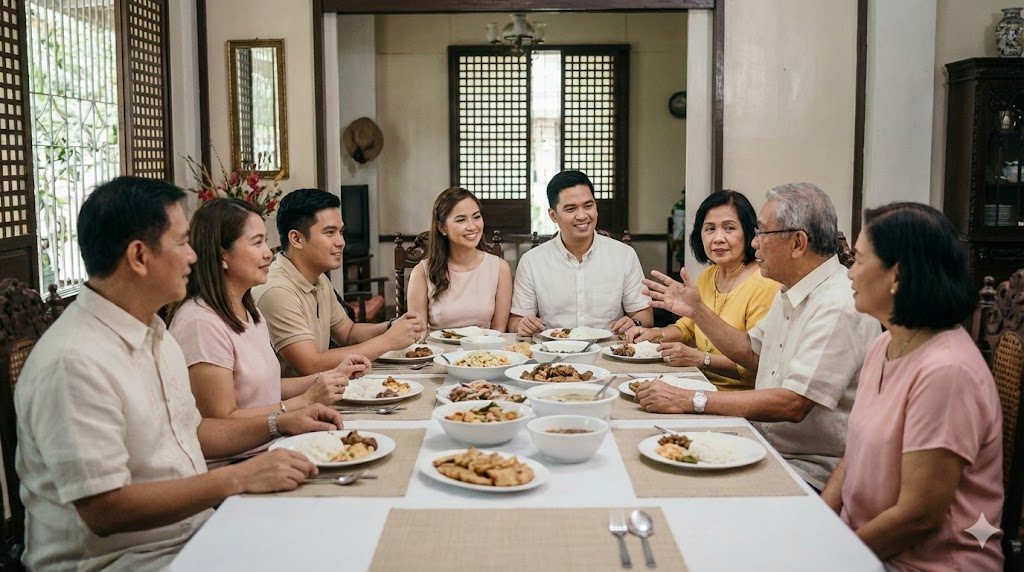
Long before the couple arrives at the altar, the pamamanhikan sets the tone for the entire union.
This is the formal meeting of the families, where the groom and his parents visit the bride’s family to officially ask for her hand in marriage.
In the past, this was a negotiation of dowries and land. Today, it is a gesture of respect.
This tradition emphasizes that marriage in Filipino culture is not just between two individuals but a merging of two clans. It is usually held over a dinner hosted by the bride’s family.
The atmosphere is meant to be warm but serious, as the families discuss the logistics of the wedding, the budget, and the future of the couple.
For couples living abroad who might have already completed a valid remote marriage for visa or logistical reasons, the pamamanhikan becomes even more poignant. It serves as the emotional ratification of the commitment they have already made on paper.
2. The Sponsors (Ninong and Ninang)
A Filipino wedding does not just have bridesmaids and groomsmen. It relies heavily on a lineup of principal sponsors, known as Ninong (godfather) and Ninang (godmother).
These are not merely ceremonial titles given to friends. Sponsors are usually aunts, uncles, or respected family friends who are older than the couple.
These individuals are chosen to serve as second parents and counselors to the couple throughout their married life.
During the ceremony, they act as the official witnesses. In a legal sense, signing the marriage license is the primary duty, but culturally, their role is lifelong mentorship.
You will also see secondary sponsors who handle specific parts of the ritual, such as the candle, veil, and cord.
The sheer number of people in the entourage reflects the community-centric nature of the culture. It takes a village to raise a child, and in the Filipino worldview, it takes a village to sustain a marriage.
3. The Barong Tagalog and Filipiniana
Filipino wedding attire is distinct and deeply historical.
The groom typically wears a Barong Tagalog. This is a sheer, embroidered shirt worn untucked over a plain white undershirt and black trousers.
The finest barongs are made from piña fabric, which is hand-woven from pineapple leaf fibers. It is delicate, expensive, and elegant.
History suggests the Spanish colonizers forced native Filipinos to wear their shirts untucked and transparent to prevent them from hiding weapons and to distinguish them from the ruling class.
Over centuries, Filipinos reclaimed this garment, turning it into a symbol of national pride and formal celebration.
For the bride, the traditional Filipino wedding dress choice is the Filipiniana or a Maria Clara gown.
The defining feature is the butterfly sleeves; stiff, arched sleeves that rise slightly above the shoulder.
Modern brides often adapt this, incorporating the butterfly sleeves into sleek, contemporary silhouettes or wearing a white gown for the ceremony and changing into a Filipiniana for the reception.
4. The Candle Ceremony
As the Filipino wedding ceremony script progresses, the first ritual object introduced is the candle. Secondary sponsors light two candles located next to the couple.
In many religious variations, the bride and groom then take these two flames and light a larger, central unity candle together.
The symbolism here is straightforward but powerful.
The two small candles represent the individual lives of the bride and groom before the marriage. By lighting the single center candle, they signify the start of their new life together.
Unlike some Western unity candle traditions where the side candles are blown out, in Filipino Catholic traditions, the side candles often remain lit.
This signifies that while they are united, they do not lose their individuality.
The light also represents the presence of God or spiritual guidance, illuminating the path they will walk as partners.
5. The Veil Ceremony
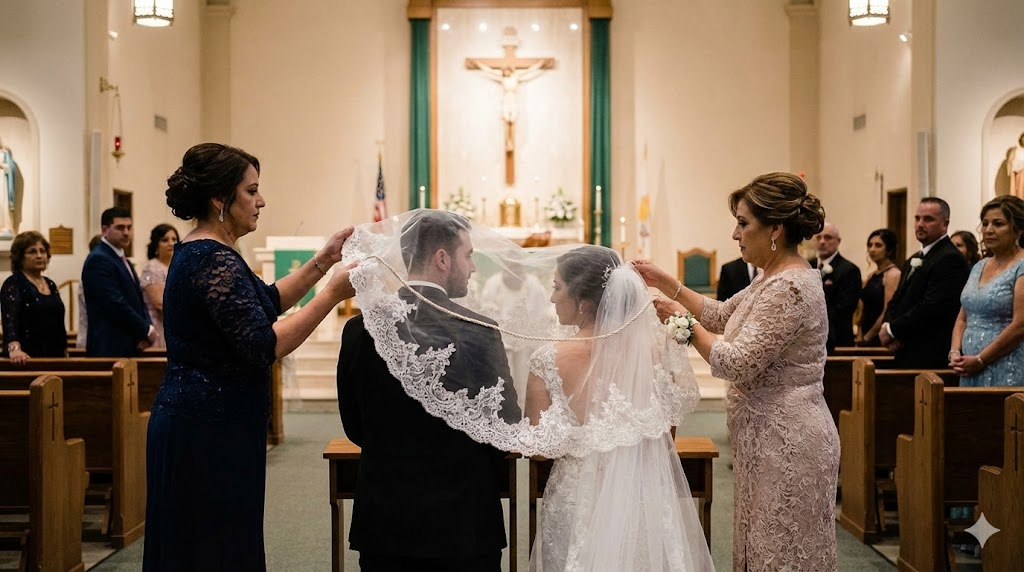
After the candle lighting, the veil sponsors approach the couple.
In Western weddings, the veil is usually worn only by the bride and lifted by the groom. In a Filipino wedding ceremony, the veil ceremony involves a much larger, white veil that is draped over both the bride and the groom.
The sponsors pin one side of the veil to the groom’s shoulder and drape the other side over the bride’s head and shoulders.
This creates a visual tent that encompasses both of them. It symbolizes that they are now clothed as one. It represents the protection of the home and the promise that they will shelter each other from the world.
The pinning of the veil is a quiet, intimate moment amidst the public ceremony. It physically connects the couple, forcing them to stay close and move in tandem.
It is a visual reminder that from this moment forward, they are a single unit facing the world together.
6. The Yugal Or Cord Ceremony
Once the couple is veiled, the cord sponsors come forward.
The cord, or yugal, is a looped rope, often made of silk, flowers, or oversized rosary beads. The sponsors place this cord over the couple's heads, resting it on their shoulders in the shape of a figure-eight.
This figure-eight represents infinity. It symbolizes a bond that cannot be broken. The cord literally ties the couple together, layering over the veil. While the veil represents protection, the cord represents fidelity and the permanence of the vow.
For couples navigating the complexities of securing a US marriage certificate and handling bureaucracy, this moment of being physically tied together often feels like the spiritual counterpart to the legal binding they have pursued.
The weight of the cord on their shoulders is a tactile reminder of the responsibility they now share.
They remain kneeling, veiled and bound by the cord, for a significant portion of the ceremony or Mass.
7. The Arrhae (Coins)
The Arrhae (pronounced ar-ray) consists of 13 coins, usually gold or silver, carried in a small pouch or basket. The coin sponsors present this to the officiant for blessing, who then hands it to the groom.
The groom pours the coins into the bride’s cupped hands, and she, in turn, pours them back into a container.
This tradition has roots in Spanish custom, where it originally symbolized the groom’s promise to provide for the family and the bride’s trust in his ability to do so.
The 13 coins represent Christ and the 12 apostles.
In modern interpretations, the symbolism has evolved to represent mutual stewardship. It is less about the groom providing and more about the couple’s shared prosperity and their pledge to manage their finances and future together.
It acknowledges that material sustenance is a necessary part of a life together, and the exchange serves as a vow to build a stable home.
8. The Nuptial Mass
Because the majority of Filipinos are Catholic, the ceremony is frequently embedded within a full Nuptial Mass.
This means the structure follows the liturgy of the Catholic Church, including the readings, the Gospel, the homily, and the Eucharist (Communion).
The script is longer than a standard civil service. It integrates the rituals of the candle, veil, cord, and coins into specific parts of the liturgy. Usually, the rites occur after the exchange of vows and rings but before the Communion.
For interfaith couples, this script is often modified.
The cultural elements, the veil, the cord, and coins, are not strictly religious doctrine but cultural heritage. Therefore, many non-Catholic or civil officiants are willing to incorporate these beautiful symbols into the service.
This allows couples to honor their heritage without necessarily adhering to a full hour-long Mass.
9. Rice Shower
When the ceremony concludes and the couple exits the venue, they are traditionally greeted with a shower of rice grains.
In an agricultural society like the Philippines, rice is the ultimate symbol of prosperity and sustenance.
Throwing rice is a wish for the couple to have a life of plenty. It signifies that they should never go hungry and that their union should be fruitful.
In recent years, due to cleanup concerns at venues or environmental considerations, some couples have switched to biodegradable confetti, flower petals, or bubbles. However, the sentiment remains rooted in the concept of abundance.
The exit is a joyous transition from the solemnity of the vows to the celebration of the reception.
10. The Money Dance
One of the most energetic traditions is the Filipino wedding tradition’s money dance, usually happening during the reception. It is often called the "Prosperity Dance."
The DJ announces the dance, and the couple steps onto the floor. Guests line up to pin cash onto the bride and groom’s clothes.
The male guests usually line up to dance with the bride and pin money on her gown, while female guests dance with the groom and pin money on his Barong.
It often becomes a playful competition to see who can cover the couple in more bills. By the end of the song, the couple might be draped in garlands of cash.
This is not considered begging; it is a community contribution to the couple’s new start. The money collected is meant to help them set up their household or pay for the honeymoon.
It reinforces the idea that the community is invested in their success.
11. Handaan (The Feast)
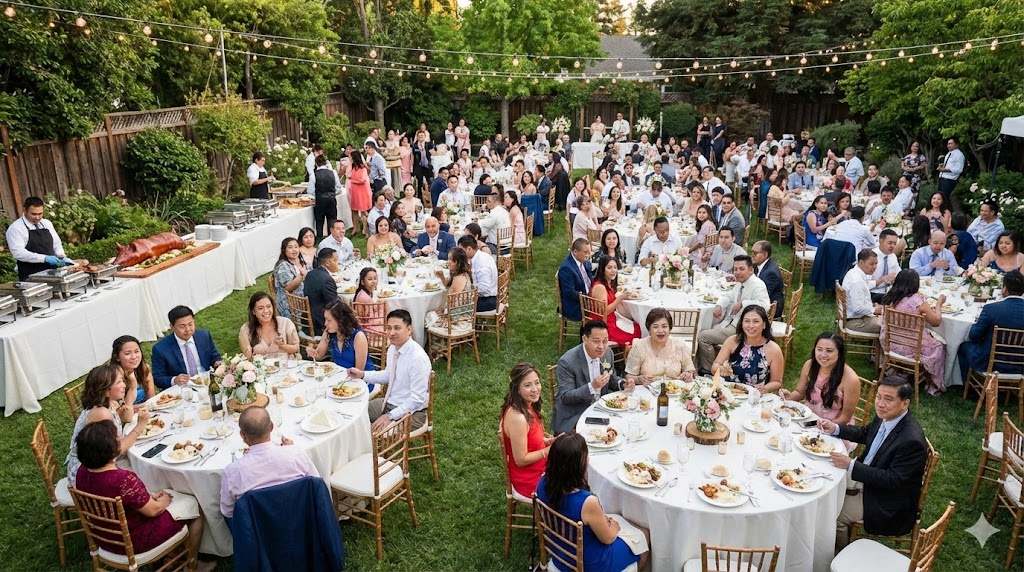
You cannot discuss a celebration in this culture without discussing Filipino wedding food.
The concept of handaan means a feast, and in Filipino culture, running out of food is a cardinal sin. The menu is usually extensive and served buffet-style to ensure guests can return for seconds or thirds.
The centerpiece is almost always the Lechon, a whole roasted pig with crispy skin. It is the star of any major Filipino celebration. You will also likely see Pancit (noodles), which symbolizes long life, and various stews like Kare-Kare (oxtail in peanut sauce) or Adobo.
Desserts are equally important, featuring rice cakes like Kakanin or Bibingka, which are sticky and sweet, symbolizing the sticky bond between the couple and the sweetness of their union.
The hospitality at a Filipino wedding is deeply generous; the goal is to feed everyone until they can eat no more.
12. Superstitions (Pamahiin)
Despite being a deeply religious culture, Filipino wedding superstitions, or pamahiin, hold a strong influence over the planning process. These beliefs are a mix of practical advice and mystical caution.
One of the most famous is Sukob. This superstition advises against siblings getting married in the same year, or a marriage happening in the same year as a death in the immediate family. It is believed to divide the luck or bring misfortune.
Another common belief concerns the wedding gown. The bride is strictly forbidden from wearing her dress before the wedding day, as this is said to cause the wedding to be cancelled.
During the ceremony, if a ring is dropped, it is seen as a sign of bad luck. Rain, conversely, is seen as a blessing, symbolizing the pouring down of prosperity.
While many modern couples view these as quirks rather than laws, they are often respected to appease the elders and ensure good vibes for the big day.
A Filipino Wedding Ceremony That Transcends Borders
A Filipino wedding ceremony is a masterclass in symbolism, translating abstract promises of love into physical weights, the veil, the cord, and the coins that a couple must carry together.
However, for couples living in the diaspora or navigating long-distance engagement, the logistics of a local civil registration can sometimes delay these meaningful rites.
Modern couples are increasingly separating the legal requirements from the cultural celebration to save time and reduce stress.
If you are currently abroad or facing bureaucratic hurdles, understanding how to get married online in the Philippines can provide a crucial pathway to fast-tracking your union.
This is where Courtly steps in as your partner. We guide couples through completing a legally recognized online marriage process and handling the paperwork, removing the administrative burden from your shoulders.
By letting Courtly handle the paperwork, you can focus your energy entirely on the bayanihan spirit and the traditions that truly define your marriage.
FAQs
Can we include Filipino traditions in a non-Catholic ceremony?
Yes. While the veil, cord, and coins are staples of the Catholic Nuptial Mass, they are cultural symbols that can be adapted for civil or non-denominational ceremonies. Many officiants are happy to include the Filipino wedding ceremony script elements because they focus on universal themes of unity, protection, and stewardship.
What is the role of the principal sponsors if we are already legally married?
If you have already completed your civil marriage, your principal sponsors act as ceremonial witnesses rather than legal ones. Their role remains culturally vital as mentors and counselors. They stand by you to affirm your union before the community, which carries significant emotional weight even if the legal papers were signed previously.
Is the Money Dance mandatory?
No, the Filipino wedding tradition of the money dance is not mandatory, but it is highly expected in traditional circles. If you feel uncomfortable with guests pinning money on you, some couples opt for a "prosperity tree" or a drop box where guests can leave envelopes. However, the dance is less about the money and more about the fun interaction with guests.
Let us handle the paperwork.
Getting married is complicated. Courtly simplifies the process and provides everything necessary to get married online, including providing a licensed officiant who can perform a remote ceremony.
Get MarriedGet married online.
Getting married is complicated. Courtly simplifies the process and provides everything necessary to get married online.
Learn More
